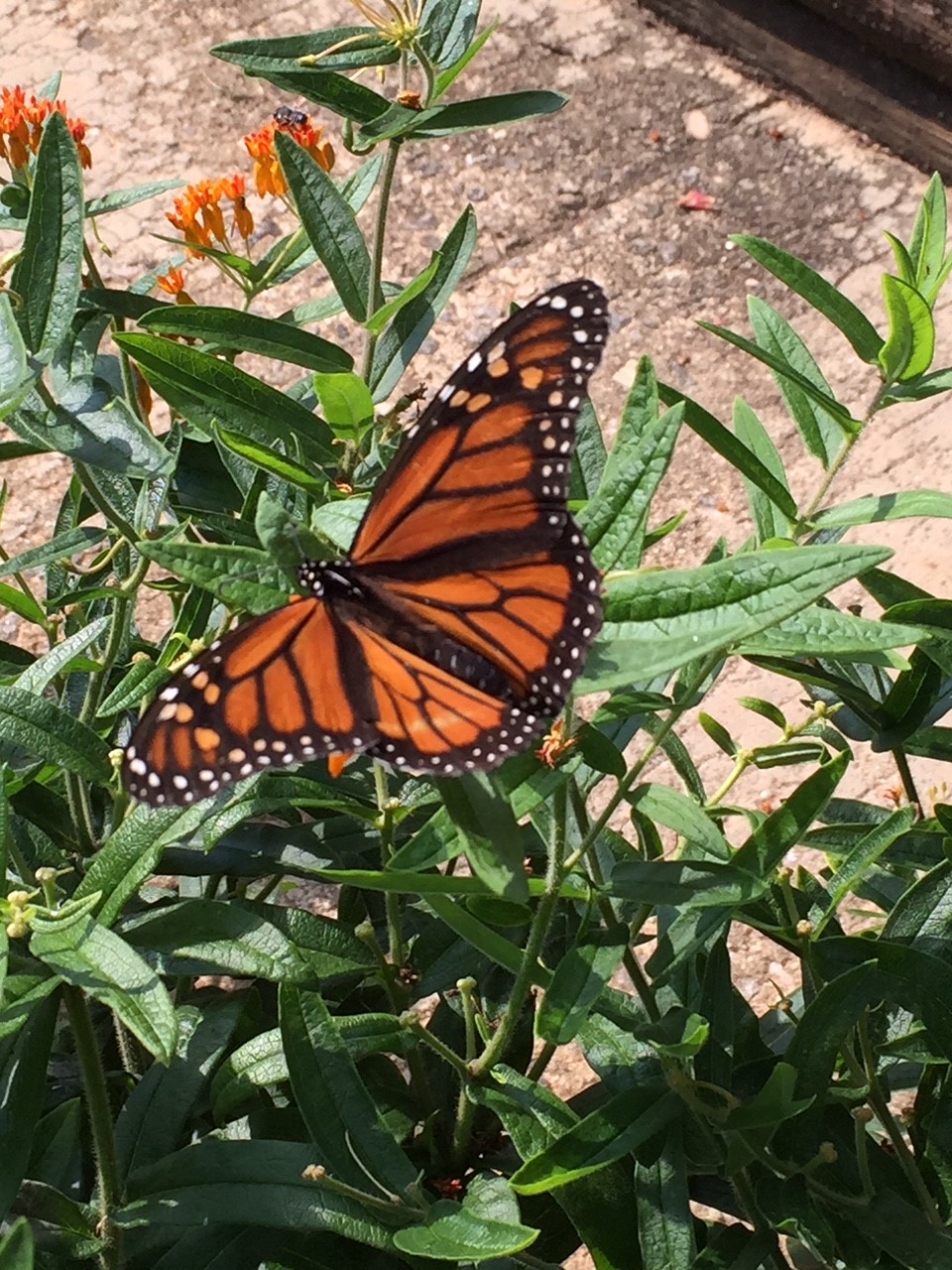
In a few short weeks the Monarch butterfly will begin its annual migration to overwintering sites in Mexico. This is one of our most 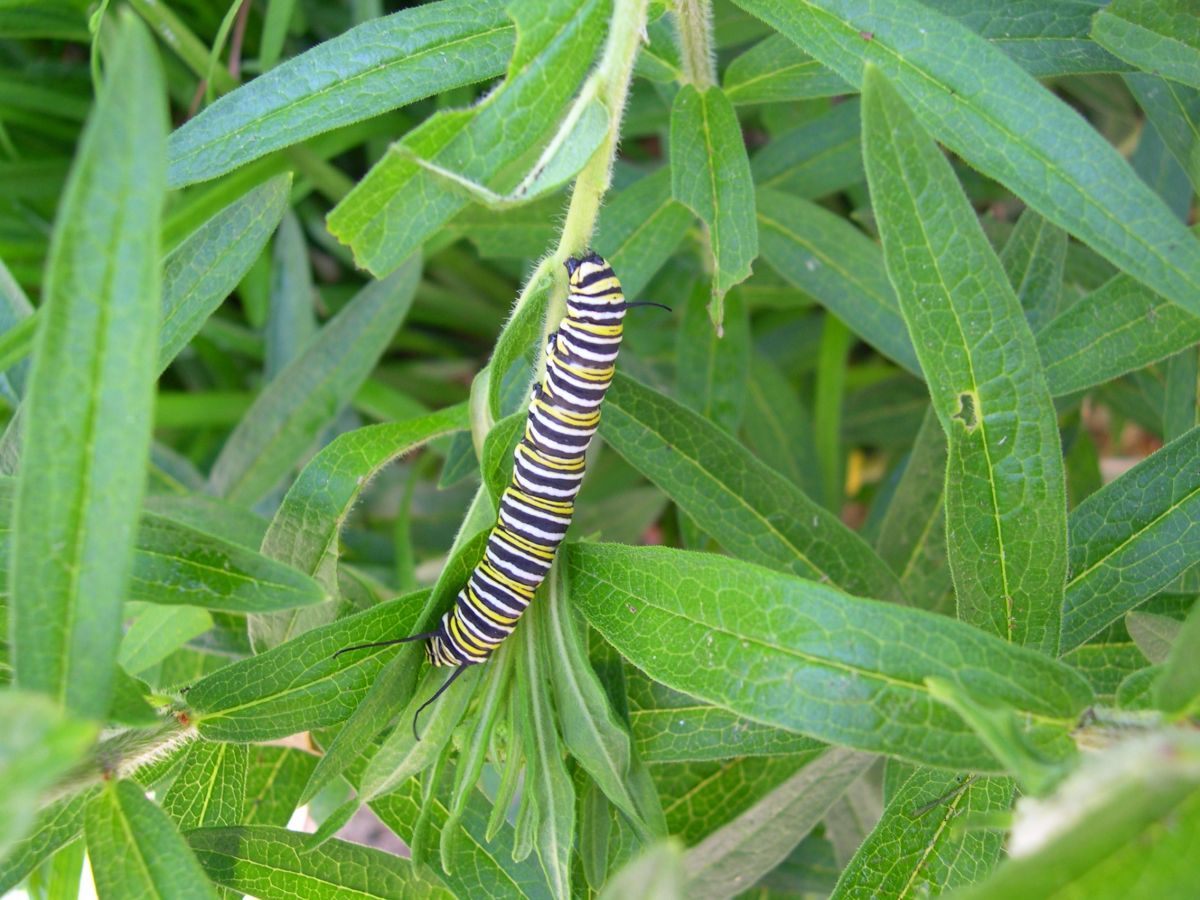 recognizable species of butterflies with bright orange wings with black veins and white spots along the wing margins. It is similar in coloration to the viceroy butterfly except it is considerably larger and lacks a complete medial black vein across the entire width of the hind wing. The full-grown caterpillar is about 1½ inches long and brightly colored with black, yellow, and white stripes, and bearing a pair of black filaments on each end.
The migration of the monarch is unique. It is the only butterfly that makes a two-way migration similar to birds. Why does it do this? Unlike other butterflies which can overwinter as larvae, pupae, or even adults, the monarch is not able to survive the cold winters in northern climates. As temperatures begin to cool and available daylight shortens, monarch will use these cues and begin their migration. Reproduction ceases and they begin to store up fat reserves by having almost a feeding frenzy on the nectar of autumnal native flowering plants. Then by using air currents and thermals they begin their southwestward trip. Some have been documented as flying up to 3000 miles to reach their winter home.
 An interesting bit of information is that most monarchs east of the Rocky Mountains will overwinter in Mexico with a few going to Florida. Most of the monarchs inhabiting areas west of the Rockies will spend their winter near Pleasant Grove, Cali-fornia with few going to Mexico.
In the late winter and early spring, cues to start the migration north become evident and the monarchs will begin to leave. It takes about four generations for the monarchs to reach their summer home in New England and eastern Canada
The monarch is the state insect of Alabama, Idaho, Illinois, Minnesota, Texas, Vermont, and West Virginia. Monarchs can be attracted by planting a butterfly garden with species of milkweed for the larvae and nectar plants for the adults.
Ken Ahlstrom, Ph.D., Economy Exterminators, Inc., Apex, NC 27523