Silverfish can become a severe pest problem when they invade your home. Silverfish is a common name for an insect that is carrot or fish-shaped with bodies covered with silvery scales, thus their name. They are found throughout the world and are a big part of North and South Carolina’s pest control. Keep reading about silverfish extermination and Economy Exterminators’ pest control process.
How to Identify Silverfish
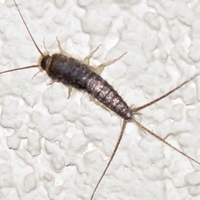 The adult size of silverfish is about 1/2 to 3/4 inches long and about 1/8 inches wide at the head, tapering to the rear. The three long, slender appendages found at the rear of the body give rise to its other common name, bristle tail. These pests are silver to gun-metal, and one species has 4 dark lines running along its entire body. One finds silverfish in attics, closets, and sometimes in bathtubs or sinks where they fall from the ceiling, electrical, and plumbing fixtures and cannot climb out.
THE BIOLOGY OF SILVERFISH
The silverfish can be an outdoor pest or transported into the structure in cardboard boxes and books. The silverfish lays 1 to 3 eggs per day or close to 1,000 per year. She places these eggs in cracks and crevices, under objects, and sometimes leaves them exposed. Silverfish need heat (72 to 90 degrees) and moisture (relative humidity of 50 to 75%) to hatch. It takes 3 to 4 months from hatching to adulthood. Most silverfish can live up to 3 years.
THE HABITS OF SILVERFISH
- Silverfish usually like to hide during the day but their activity increases during the evening and night.
- They rest in cracks and crevices in skylights, under insulation, near roof rafters, and the plywood roof. They will also hide in cardboard boxes stored in attics.
- They will roam a fairly large distance to find food. Once the food is found, silverfish tend to stay near the food source. They can be found almost anywhere in the home, bathrooms, kitchens, bedrooms, closets, storage areas, and attics.
- Silverfish can survive in very hot attics for weeks without water and food. They are very adaptable.
- Silverfish can damage paper, books, cardboard boxes, wallpaper, and wallpaper paste. Like the four-lined silverfish, some silverfish can be found outdoors under wood shingles and along the foundation in flowers and shrubbery mulch.
WHERE DO CUSTOMERS SEE SILVERFISH
- Silverfish are first seen in bathroom tubs, showers, and sinks. They usually fall from the skylights and light fixtures in the ceiling.
- Once the silverfish are in the attic, they find cracks and crevices around the skylights or light fixtures and then fall into the fixtures and cannot get out. Usually, these are the first sightings — especially in the spring and summer.
- Silverfish may be found in the late fall and especially at Christmas when homeowners are taking decorations from boxes in the attic. These sightings represent a clear indication of a silverfish infestation.
FEEDING PREFERENCES OF SILVERFISH
Silverfish can be found almost anywhere inside the house, but usually, they are close to a food source. They prefer foods containing proteins and carbohydrates like flour, starch, paper, sugar, dead insects, glue and paste. Once inside, they can feed on various fabrics, creating large holes instead of small ones typically created by clothes moths. The affected fabrics can be natural fibers like cotton, wool, and silk or synthetic fibers like rayon.
WAYS TO LIMIT SILVERFISH INFESTATIONS:
- When receiving packages, check cardboard boxes for pests
- When receiving old stored books, vacuum all bindings
- Store all items in attics and storage areas in tight plastic containers
- Store all important linens, cotton, rayon, and artificial silks in sealed containers
- Seek professional assistance and a pest prevention program, such as our Proven Pest Elimination program
Economy’s Silverfish Extermination Program
Economy Exterminators’ Pest Control Solutions program uses the 4-step approach to solve your silverfish problem:
- Our 1st step is inspecting the property by a Raleigh, Charlotte, or Wilmington customer service specialist. It is very important to know the silverfish species involved and the severity of the pest problem. This is especially true with silverfish since some pest control materials work much better to eliminate the infestation than others.
- The 2nd step is the initial treatment by a customer service specialist of all areas the inspection revealed as critical. Economy Exterminators uses the newest and most effective materials to solve this pest problem fast for you. The attic, basement, lower levels, crawlspace, and outside areas are typically critical. Since silverfish can infest mulch areas, treating these areas may be necessary for the best protection. Special attention will be applied to all the windows, doors, eaves, and foundations on the outside.
- The 3rd step is a 37-point inspection to identify areas on your property that allow silverfish easy access by either direct access (cracks in the foundation), food sources attractive to the silverfish, or the environment inside and outside.
- The 4th step is an ongoing maintenance program to prevent the next generation of silverfish from infesting your home or building. New infestations will be moving on your property from the adjoining property. Our exclusive Pest Control Solutions program is designed to prevent the next generation. As always, our unlimited extra service is at no charge.
Reach out to our experts to learn more about silverfish extermination and how Economy Exterminators can help you with your North and South Carolina pest control needs!