It is important to recognize the signs of a bed bug infestation. The bed bug gets its name from its close association with humans and their beds. Bed bugs were introduced to the US by the early colonists. It was thought after World War II that bed bugs were eradicated in the US. In recent years, the numbers of incidents of people being bitten by bed bugs has increased exponentially in Raleigh, Charlotte, Wilmington and across the country.
 How to Identify Bed Bugs
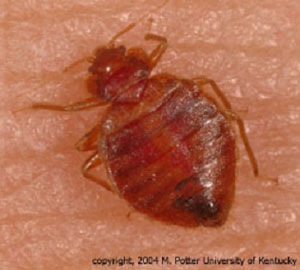 How to Identify Bed Bugs
Bed bugs are small, oval, wingless insects that reach about 1/4 inch in length. They have flat bodies and are reddish-brown in color. Bed bugs feed by sucking blood from people or animals. They do not develop wings and cannot fly. Bed bugs are mostly nocturnal, which makes them difficult for most people to spot during the day. Although they can be infected with at least 28 human pathogens, no study has found that the bed bug can transmit any of these diseases to humans.
How to Tell If You Have Bed Bugs
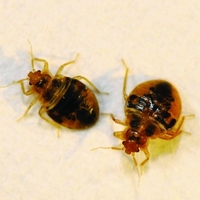 Bed bugs are generally nocturnal, and due to their small size, it can be very hard to spot them with the naked eye. However, bed bugs leave behind physical traces when they go out to feed, meaning there are a few warnings signs you can use to tell if you have a possible bed bug infestation on your hand:
Look for bed bug skins or hard shells on your mattress. As bed bugs feed and grow larger, they will shed their exoskeleton and leave it behind. These clear, translucent shells may be left behind as the bed bugs grow, which will give you an opportunity to spot the infestation during the day.
Check for bed bug fecal stains on your mattress, sheets, mattress covers, and pillows. Remember, the bed bugs are relatively small, so they will not just crawl on top of the sheets. You will need to pull off all of your bedding and examine everything, layer by layer, to see if there are any signs of bed bugs. Fecal stains are not red, despite bed bugs mostly feeding on blood. These stains will be dark brown or even black and look like dots or longer smears on your mattress or sheets. If you notice these markings, it is a pretty good sign that you have bed bugs.
The most distressing sign of bed bugs can come from finding blood stains on your sheets or night clothes. Because the bed bugs draw blood to feast on, you can notice light blood spotting on whatever material touches your skin directly. If you notice small blood spots on your sheets or clothes, you might have bed bugs.
You can also examine your body for tiny red marks or welts, which may indicate the presence of bed bugs in your room. If you have raised red bumps on your body and experience any itching or burning sensations, compare them to these physician photos of bed bug bites to see if they’re similar. Wash the bites with soap and hot water to prevent infection.
Where do Bed Bugs Come From?
Bed bugs are great hitchhikers and are easily transported. Their transmission points are places of high human occupancy like hotels, motels, houses, etc. Because of their flattened bodies, bed bugs hide in small crevices, particularly those associated with mattresses, box springs, bed frames, and headboards. In addition, they may be carried as stowaways in luggage, furniture, clothing, and boxes when these are moved between hotels, homes and apartments.
Bed Bug Biology
Under normal conditions, bed bugs can live for over 300 days. The female bed bug lays up to 5 eggs a day. These eggs are approximately 1 mm long, white and are glued in protected cracks and crevices. A female can lay over 500 eggs in her lifetime.
Where do you See Bed Bugs?
- Usually, people do not see bed bugs because the pests hide during the day. At night, bed bugs become active and are attracted to sleeping people and animals.
- Bed bugs do not build nests but they do tend to congregate in habitual hiding places. These areas are marked by dark spotting and staining, which is the dried excrement of the bugs. You can also find eggs and eggshells, cast skins of nymphs and even the bugs themselves.
- Another likely sign of a bed bug infestation is the presence of rusty or reddish spots of blood on bed sheets, mattresses, and walls.
- They may also be found along the edge of and under wall-to-wall carpet, behind pictures, switchplates, and outlets, in clothing and inside clocks, televisions, phones and smoke detectors.
- A sign of being bitten is the presence of small, red, itchy bumps on the skin. However, some individuals may not have any reaction to the bite.
- Humans are bed bugs’ preferred host.
Do-it-yourself ways to prevent the introduction of bed bugs into your home:
- Become familiar with the signs of an infestation
- When traveling, examine your hotel or motel room for the presence of bed bugs
- Bag suitcases and soiled clothing in plastic bags while in motel rooms
- Thoroughly examine all personal belongings before leaving for home
- Once home, remove soiled clothes from plastic bags, wash and dry immediately on high heat for at least thirty minutes
- Seek the help of a licensed pest control operator such as Economy Exterminators
Economy Exterminators’ bed bug control program uses the 3-step approach to solve your bed bug pest problem:
- Our 1st step is the inspection of your property by a Wilmington, Raleigh or Charlotte customer service specialist. It is very important to have this pest properly identified since there are other pests that are very similar, like bat bugs. Bed bugs can spread throughout a building, hide in cracks and crevices and come out at night. These are just a few of the areas that need to be inspected: mattresses, box springs, bed frames, wall coverings, pictures, light switches and electrical socket covers, drapes and stuffed chairs where carpets and baseboards intersect, etc. Bed bugs prefer wood over plastic and steel.
- The 2nd step is the initial treatment by a customer service specialist of all areas that the inspection revealed as critical areas. This can be a very extensive treatment taking hours depending on the severity of the infestation. Critical areas usually include the bedrooms, family rooms and any areas in which people rest or sleep. This service will require customer cooperation and prior preparation to get the best results possible.
- The 3rd step is our ongoing Economy Exterminators bed bug control program.
Economy Exterminators utilizes a thermal bed bug treatment regiment for dealing with bed bugs. This will be available for both residential and commercial customers. All life stages of bed bugs are killed after exposure to 7 minutes of extreme heat (115°F). During treatment, the room is heated to 135°F for a few hours to ensure the heat penetrates all folds and creases. This treatment requires little preparation by the customer. If you want to kill bud begs once and for all, ask about our heat treatment when you contact the pest control experts today!